Home backup
How to connect a power station to your house (safely)
The safe ways to power home circuits from a portable power station: extension cords, manual transfer switches, smart panels and interlock kits. Never backfeed.
By WattKitFinder Editorial TeamUpdated 6 min read
Option 1: extension cords (no installation)
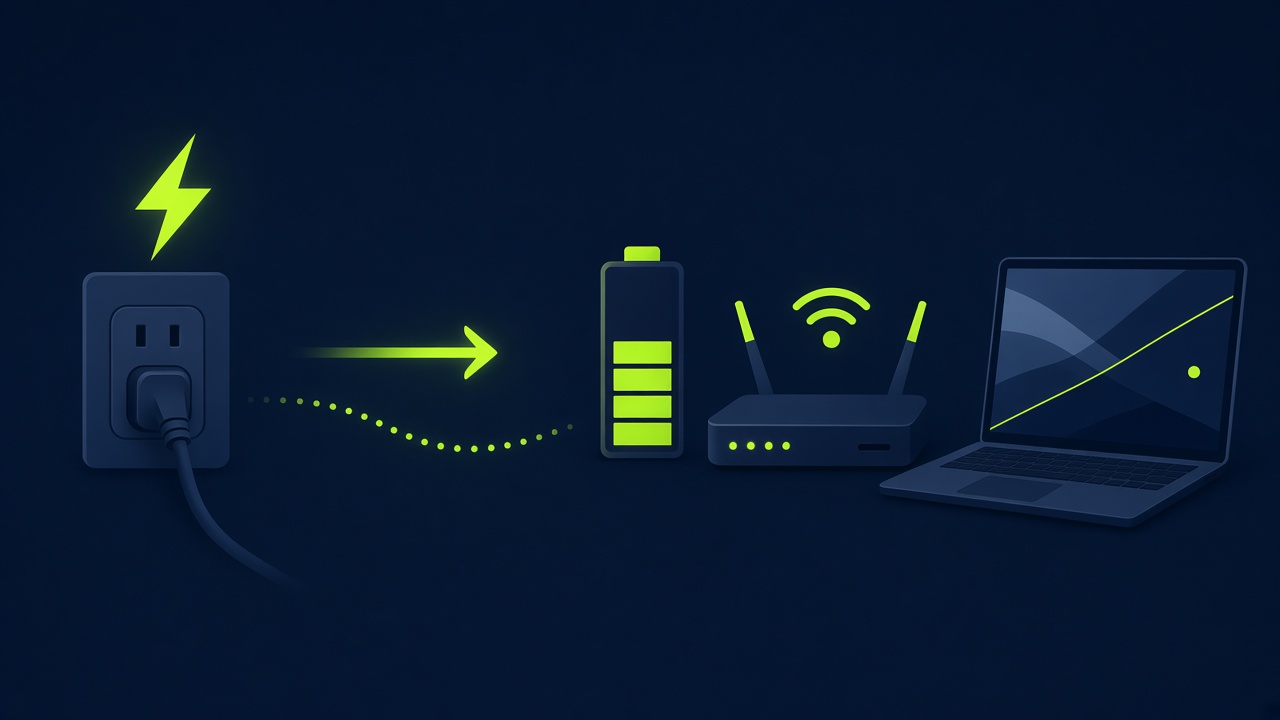
Run a heavy-duty 12- or 14-gauge cord from the station to the fridge, and a power strip for the router and lamps. It is free, safe and works with every model. The limit is hard-wired loads such as furnace blowers, well pumps and ceiling lights.
Option 2: a manual transfer switch
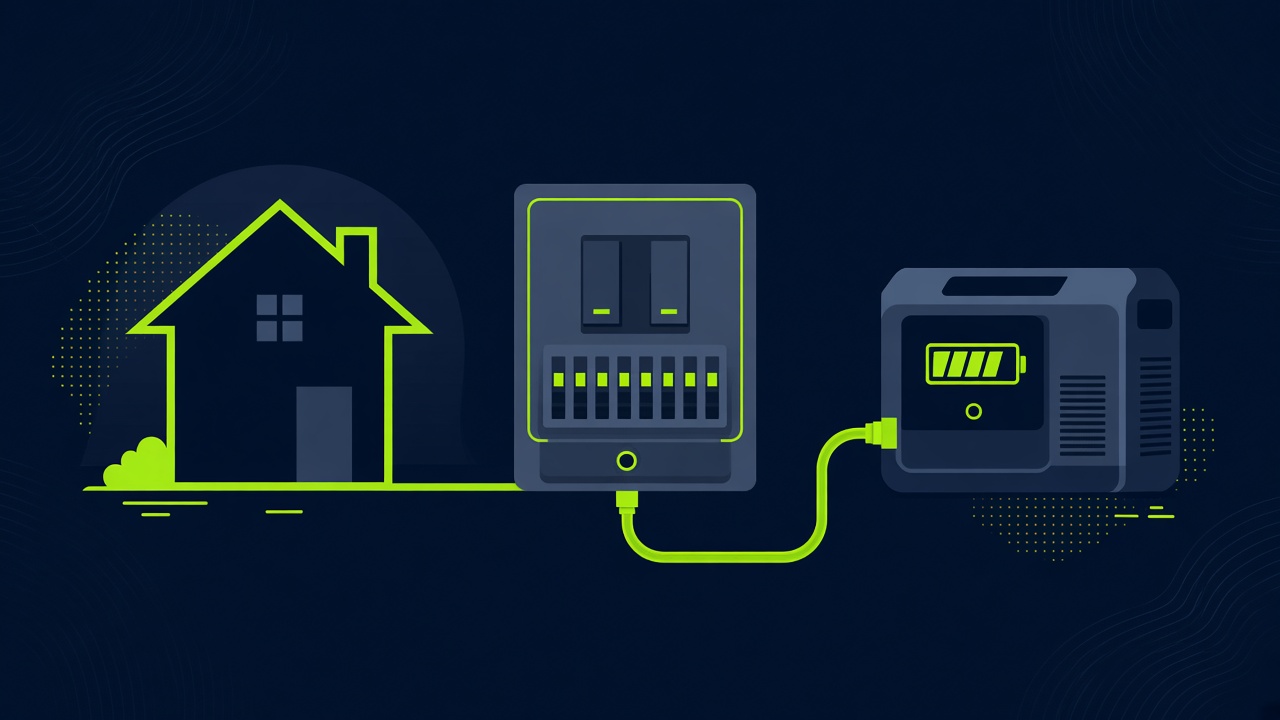
A manual transfer switch (MTS) is wired next to your breaker panel and lets you move selected circuits (typically 6–10) from grid to station. Jackery sells its own MTS for HomePower models, and BLUETTI offers smart panels for Apex systems. Expect $300–$600 for the switch plus an electrician's installation.
Check your station's connection: 120V units with a TT-30 or L5-30 outlet suit a 120V transfer switch; 240V circuits (well pumps, dryers) need a split-phase capable unit such as the Jackery Explorer 5000 Plus, HomePower 3600 Pro Max or BLUETTI Apex 300.
Option 3: automatic and smart transfer switches
Automatic switches move circuits to battery the moment the grid fails, often in under 20 ms, so the house does not notice the outage. They cost more ($1,000+ installed) but turn a large power station into a true home battery.
What never to do
Never use a 'suicide cord' (male-to-male plug) to feed a wall outlet. It energises the utility line, can electrocute line workers, and violates the National Electrical Code.
Frequently asked questions
Can I plug a power station into my house?
+
Not into a wall outlet. Use extension cords, or have an electrician install a transfer switch or generator interlock connected to the station's 30A outlet.
Do I need an electrician to install a transfer switch?
+
In most US jurisdictions, yes: transfer switches connect to your main panel and usually require a permit and licensed installation.